LegisTech Roundtable on Recent Developments in the Modernisation of the U.S. Congress
Event held on March 16th, 2026 at the Organization of American States

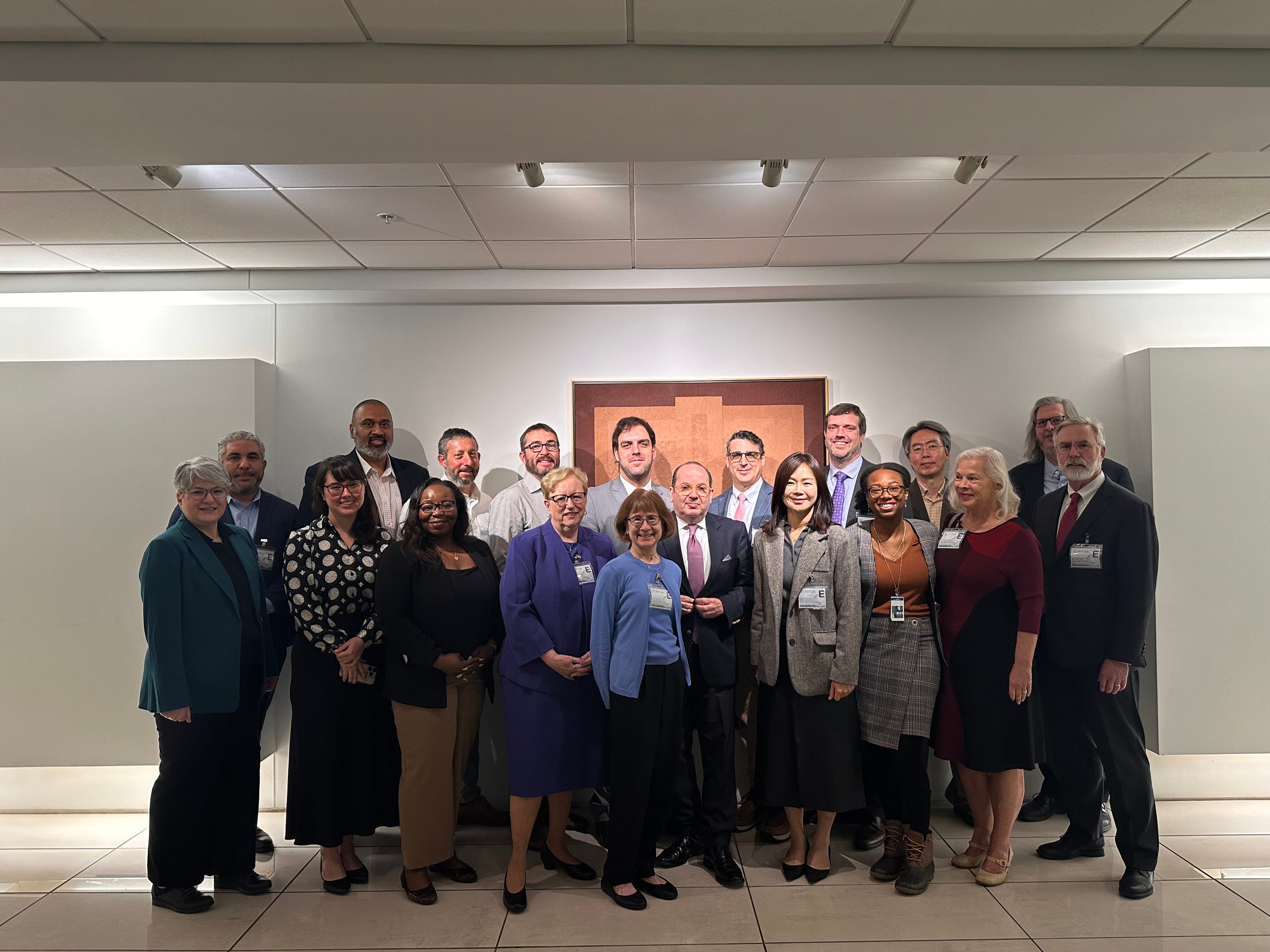
On March 16th, 2026, Bússola Tech, in partnership with the Organization of American States (OAS) and the American Governance Institute (AGI), convened a high-level roundtable titled “LegisTech: Recent Developments in the Modernisation in the U.S. Congress” at the headquarters of the OAS in Washington, D.C.
The event brought together senior staff from the U.S. House of Representatives, the U.S. Senate, the Library of Congress and civil society organisations for a focused exchange on institutional modernisation, digital transformation in the context of the U.S. Legislative Branch.
The opening segment featured a formal recognition of Catherine Szpindor, honouring her distinguished service as Chief Administrative Officer of the U.S. House of Representatives from 2021 to 2026. The recognition was delivered through remarks by Moises Benamor, representing the OAS, Luís Kimaid on behalf of Bússola Tech, Daniel Schuman from AGI, and Wade Ballou, recently retired from the U.S. House of Representatives, reflecting both institutional and professional perspectives on her tenure.
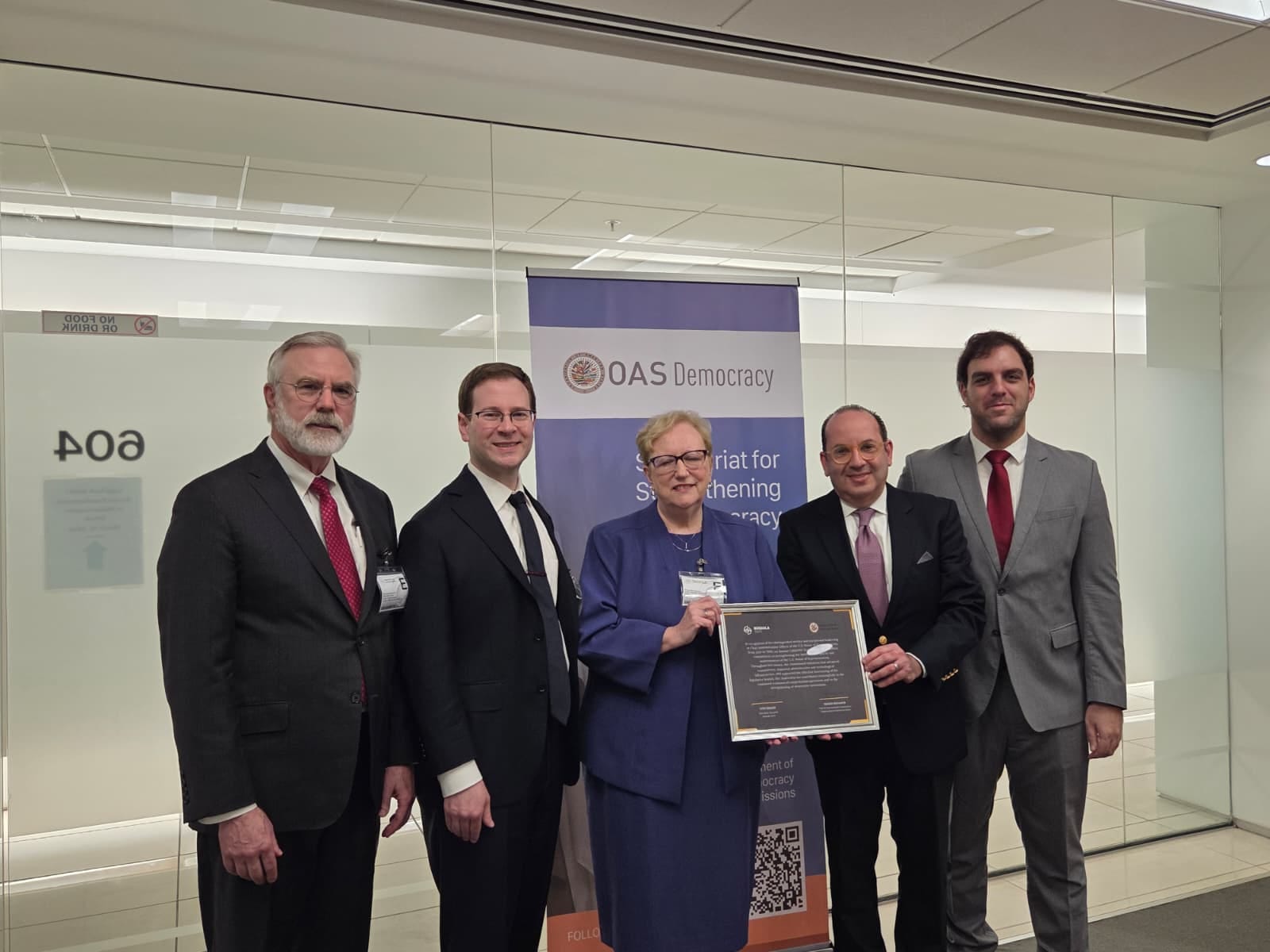
The recognition highlighted Ms. Szpindor’s leadership for its ability to navigate the inherent complexity of Congress, balancing tradition, procedure, and political sensitivity while advancing meaningful improvements in administrative and technological capacity. Her tenure coincided with a period of significant disruption and transformation, during which the House strengthened its digital infrastructure, expanded its operational resilience, and laid the groundwork for more structured approaches to emerging technologies, including artificial intelligence.
The roundtable discussion that followed, structured as an open-floor exchange among participants, provided a candid and substantive exploration of the current state of modernisation across the U.S. House of Representatives, the U.S. Senate, and the Library of Congress. Rather than focusing on isolated technological solutions, the discussion centred on the institutional conditions required for sustainable transformation.
A central theme throughout the conversation was the recognition that the implementation of artificial intelligence in parliaments is fundamentally contingent on the quality, structure, and governance of legislative data. Participants repeatedly highlighted that AI systems are only as effective as the underlying data ecosystems that support them, reinforcing the need for long-term investment in data standardisation, interoperability, and accessibility. At the same time, the discussion revealed the inherent tensions in parliaments between transparency and sensitivity, particularly in relation to sensitive data, and how these constraints shape the design and deployment of digital systems.
Another key dimension of the exchange was the complexity of coordination within an institution such as the U.S. Congress. Participants highlighted the challenges of aligning multiple offices, committees, and support agencies, each with distinct mandates, cultures, and operational constraints, while advancing shared modernisation objectives. In this context, collaborative mechanisms such as the Congressional Data Task Force and cross-institutional working groups were identified as critical enablers of progress, providing spaces for sustained dialogue, trust-building, and incremental reform.
The discussion also pointed to the importance of institutional culture in shaping modernisation outcomes. Beyond technical capacity, participants emphasised the need for individuals within the institution who understand both the operational realities of legislative work and the potential of technology, and who are able to act as bridges between technical and non-technical communities.
From an international perspective, the roundtable reinforced the role of knowledge-sharing and inter-parliamentary cooperation as essential components of modernisation. The experience of the U.S. Congress continues to serve as a reference point for many legislative institutions worldwide. At the same time, comparative insights from other jurisdictions underscored that innovation in parliaments is not linear, and that learning from both successful and unsuccessful initiatives is critical to advancing the field.
The event concluded by reaffirming the shared commitment of Bússola Tech, the OAS, and AGI to fostering a dialogue on parliamentary modernisation. The discussions highlighted that sustainable progress depends not only on the adoption of new tools, but on the strengthening of institutional foundations, the alignment of stakeholders, and the cultivation of a culture capable of supporting continuous adaptation.
Co-Organizers

Strategic Partners